Showing posts with label movies. Show all posts

Friday, November 23, 2007

The Other Side of What Heaven?

Back in 2001, Disney released the movie "The Other Side of Heaven," starring Christopher Gorham and Anne Hathaway, based on the true story of John Groberg's experiences as a young missionary on the exotic island of Tonga in the 1950's.


At first glance, this may seem like a touching, inspirational adventure movie, but as with all media, a little investigation is necessary to find the real message behind the silver screen. Not much research was needed to quickly reveal the truth of this seemingly innocent "Christian" movie. On the
Watchman Fellowship website, I found a movie review that shed some light on this motion picture.

Though the advertising of the film may not blatantly show this, but in actuality, the film is connected to Mormonism. The main character was a Mormon missionary (in case you were not able to deduce that from his outfit when he first arrived on the island), and he is currently an Elder in the Church of Jesus Christ of Latter-day Saints (LDS). Additionally, the writer/director, Mitch Davis is a member of the LDS church, and the film's distributor, Excel Entertainment endorses "...all types of entertainment media that is reflective of Mormon or LDS culture."

I also found it quite interesting that when the film was first released in December 2001, the distributors chose to only show the film in Utah and Idaho with the tag line for the movie stating:

"The true story of Groberg's adventures on the islands of Tonga as a missionary for the Church of Jesus Christ of Latter-day Saints."

But when the movie opened nationwide four months later, they chose to remove "for the Church of Jesus Christ of Latter-day Saints" from the tag line in the official press release. However, once the film jumped to the box office top 20 list, they changed the tag line again: "the true story of a Mormon missionary sent to the kingdom of Tonga in the 1950's."

Not surprisingly, Excel admitted that prior to the movie's nationwide release, they had tried to get advertising from several Christian media organizations, but they were rejected. So, we can easily deduce that the reason they changed the original tag line was to make the film appear to be "nondenominational" in order to deceive the general public. But despite this deception, even the secular audience was not impressed. Negative reviews were splashed all over the news, such as in the Washington Post, New York Daily News, and the Miami Herald.

Along with the bad critiques, the film did have its supporters and good reviews in the media. Even Bill McKeever, who is the Director of Mormonism Research Ministries, did not bash the movie. He commented that "... there is not a barrage of unique LDS teachings...." in the film. However, he would definitely agree that the movie does pose several concerns to the evangelical Christian community:

  1. The movie seeks to put the Mormon church and its mission's ministry in a good light to the viewing audience.
  2. The movie has a scene that portrays a Christian minister as the bad guy because he "tells his people to stay away from the Mormon missionaries because they are teaching false doctrine."
  3. The movie can also be used in Mormon proselytizing efforts.
  4. The God that John Groberg (both in the film and in real-life) refers to is not the God of the Bible. He is the Mormon God. (To learn more, watch this video below, and you can find additional articles at Watchman.org)


In conclusion, though the film may have great acting, beautiful scenery and a moving musical score, that doesn't change the fact that it is merely a tool used to spread the heresy of Mormonism and the LDS church. Unfortunately, because of the influence of Elder Groberg, 40% of Tonga is Mormon (approx. 43,000 people), and it will only be through the grace and mercy of the real God of the Bible, that these lost people will come to true salvation. "For by grace you have been saved through faith; and that not of yourselves, it is the gift of God; not as a result of works, so that no one may boast." (Ephesians 2:8-9 NASB)

Tuesday, November 6, 2007

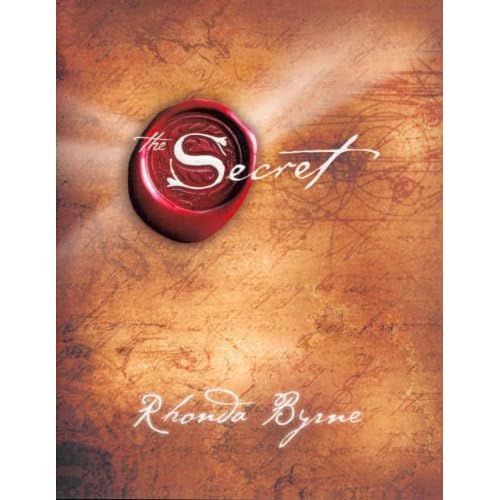
What is "The Secret"?

Warning: This blog will reveal spoilers to the book, "The Secret." So, if you don't want to know the secret of "The Secret," I would suggest not reading any further. Otherwise, don't say I didn't warn you...

One of the books on the #1 best sellers list right now is "The Secret" by Rhonda Byrne, and it's companion DVD has sold over a million copies since its release in February 2007. "The Secret" is basically a self-help book that claims to have the ultimate key to achieving success and happiness. The book and DVD give off a Da Vinci Code feel and boast that this "secret" has been known and used by some of the greatest minds in history, but for eons, "the secret" has been hidden from the public... until now.

On the Watchman Fellowship website, there is a video clip of an interview on the Today Show with one of the teachers quoted in the book & DVD, James Arthur Ray, along with Dr. Gail Saltz, a psychiatrist and Today Show contributor.

What is the secret? It's three simple steps: Ask... Believe... Receive.

The author claims that based on the "Law of Attraction," if you think about something, your mind gives off energy and vibrations that are capable of bringing external objects to you or away from you. For instance, one woman says that when she found out she had cancer, she used the secret and imagined that the cancer was out of her body. Later, she found out she was healed. Others have claimed that they have become wealthy using the secret. However, with all these lofty claims, you have to ask yourself, "Doesn't this sound a bit too good to be true?" Even the TV show,
Boston Legal, showed that "The Secret" may have "some kinks to iron out."

During the Today Show interview, Mr. Ray claimed that the secret is based on quantum physics, but this has yet to be proven by the scientific community. For something to be considered scientific, it must meet the following criteria.

  1. Must be based on data.
  2. Must be observable.

  3. Must be able to be tested.
  4. Must have reproducible results.
"The Secret" can claim none of those. Dr. Saltz stated that there is nothing wrong with thinking positively, but claiming that this "Ask... Believe... Receive" concept is a science, is both deceitful and potentially harmful. I also think that the statement made by Prof. Robert Thompson of Syracuse University is very revealing. He said, "It's amazing how we really are a nation of, at best, great optimists, and at worst, real suckers."

The concept behind "The Secret" is Gnosticism, which has been around for at least 2000 years, and the secret itself, the knowledge and power that is being promised, dates back to the first sin of Adam and Eve, the desire to be God. Basically the secret tries to convince you that you can control your own future by being your own god.

Sadly, this lie has been deceiving people for centuries, and it has caused countless disappointments and ruined lives. Jerry Adler, Senior Editor of Newsweek magazine wrote an article about the book and said, "The message isn't new; the packaging is what's new.... The book is potentially psychologically harmful, ethically deplorable, and scientifically nonsense."

Acts 17:11 reminds us that we shouldn't believe everything that we read. We should always compare "secret knowledge" to what the Bible says. If it's contradictory, then it is false. We should be as careful as Beareans... "Now the Bereans were of more noble character than the Thessalonians, for they received the message with great eagerness and examined the Scriptures every day to see if what Paul said was true." And when compared to Scripture, "the secret" doesn't hold water.

A good resource that will help you learn more about "The Secret," its origins, and dangers, is the new book, "The Truth Behind The Secret." Click here to read the press release.

Wednesday, October 10, 2007

The Da Vinci Con

Since its book release in 2003 (and the movie version in 2006), The Da Vinci Code, the mystery/detective novel by Dan Brown, has been a hot topic of controversy in both the church and the media. Dan Brown tells an intriguing fictitious story of an American symbologist who gets caught up in a ghastly murder in France and then seeks to find the murderer as well as the secret truth about Jesus Christ and Mary Magdalene that led to the victim's untimely demise. Since the book hit the shelve in 2003, it has sold over 60 million copies worldwide, and the blockbuster movie in 2006 starring Tom Hanks has grossed over $758 million worldwide.

Though the book is advertised as fiction, Dan Brown makes it very clear in both the book as well as in interviews that he honestly believes the content of The Da Vinci Code which includes (excerpt from a Watchman Fellowship article):

  • The Bible cannot be trusted.
  • Jesus is not God, nor did the first century church believe him to be God.

  • Jesus was married to Mary Magdalene and intended to restore the worship of the goddess.
After watching the ABC news interview with Dan Brown, I was shocked that all his curiosity began with a painting that his college professor had shown them in class one day. In the painting of the "Last Supper" by Leonardo Da Vinci (which is discussed in the book and shown in the movie), the "cup of Christ" is not in the painting anywhere, and some believe that the person on Jesus' right is not the Apostle John but is Mary Magdalene. They believe that Da Vinci was trying to convey in his art that Mary was the Holy Grail. Whether or not this is true, I am simply amazed that this one piece of art all of sudden is treated like the greatest archaeological find in history. Even if Da Vinci did intend to point to Mary as the Holy Grail... so what? People throughout history have painted their interpretation of things; so does that mean that the ancient paintings in Greece that depict Pegasus the flying horse or Medusa the snake-haired gorgon-women must also be real things and be absolutely true too? I think not!

I also think that Dan Brown's assumptions tainted his judgment during his "investigation" of the Holy Grail truth pursuit. He either intentionally fabricated or apparently did not do any real academic research on the actual Council of Nicea and what really transpired during that meeting. The book claims that "...Jesus' establishment as the ‘Son of God’ was officially proposed and voted on by the Council...[and it won by] A relatively close vote at that." (pg. 233) First of all, Jesus being the "Son of God" was never in question at the Council meeting. There was a debate on whether Jesus was of the same substance as God (orthodox Christianity) or if he was of similar substance (Arianism). "The council decided against the Arians overwhelmingly (of the estimated 250-318 attendees, all but 2 voted against Arius)." (excerpt from Wikipedia)

Lastly, I also think that the people who believe that Jesus was married to Mary Magdalene and base this belief solely on a damaged gnostic document, the Gospel of Phillip, are being very naive and presumptuous. In the document, it says that Mary was beloved of Jesus, but I should point out that it also says that James was his beloved too. Dan Brown also claims that the document clearly shows that Jesus and Mary were married because he kisses her many times on the mouth. However, that is not true. Since the document is damaged, all it actually says is:


"And the companion of the [...] Mary Magdalene [...] her more than [...] the disciples [...] kiss her [...] on her [...]"

For all we know, the document could have originally stated, "And the companion of [the Apostle Peter was] Mary Magdalene [and he liked] her more than [all] the disciples [and would] kiss her [occasionally] on her [hand]... who knows? But nowhere does the document say that Jesus and Mary were married.

Hopefully, Christians will not be discouraged by the many people who have have bought into Dan Brown's ridiculous theories. Instead, I hope that they will use this book & movie as an opportunity to engage our culture. By researching the claims he makes about Jesus, the Bible, and the Church, we can be prepared to refute the errors and present the truth about the real Jesus of the Bible, His mission, and His salvation.

For more information and resources on The Da Vinci Code or Dan Brown, please visit the Watchman Fellowship website.

Friday, September 14, 2007

The Gospel According to Lucas

As I was surfing through the Watchman Fellowship website, I came across this article about Star Wars called The Gospel According to Lucas, Part II. First of all, I'm a huge movie fan, and I've always loved Star Wars (the original trilogy especially)! It was (and still is) one of my favorite movies to watch when I was a kid (and now as an adult). The article I read had some really interesting insights into the religious themes in the movie.

I once saw a Star Wars behind-the-scenes documentary, and I remember that George Lucas had mentioned that he got the idea of "the Force" from elements of Buddhism, especially Taoism (pronounced DOW-ism). The Watchman article included a chart that laid out a bunch of the similarities between Star Wars and Taoism. Very interesting!

The only part of the article that I didn't agree with was the statement:
"When the Millennium Falcon hides from the Empire in what its crew thinks is a cave inside an asteroid, only to discover they are inside the belly of a huge space slug (in Empire), it’s a clear allusion to the book of Jonah."
I'm not sure why the author would say that the space slug incident was an allusion to Jonah. I think he was a little off. The only similarity between the two is that there was a large animal with a person inside of them. I don't think it's an allusion to Jonah at all.

Star Wars is not a Christian movie, and neither does it contain "the essential beliefs of the New Age movement [which] include pantheism, reincarnation, and moral relativism." It does however have some hints of Christian themes in it, and I liked how the article gives several key areas in the movie that can be used as discussion starters regarding Christianity, especially showing the differences between "the Force" and God.

If you would like to read Part I of The Gospel According to Lucas or any other article on the Watchman Fellowship website, click here.